Engineering the
Smart Factory
We bridge the critical gap between Information Technology (IT) and Operational Technology (OT), deploying Industrial IoT ecosystems that optimize global supply chains and prevent machine downtime.
The Challenge
The Industrial Blind Spot
In modern manufacturing, physical machinery is only half the equation. The true differentiator is the software that orchestrates it. Legacy Manufacturing Execution Systems (MES) and ERPs are often siloed, resulting in blind spots on the factory floor.
Without real-time data extraction from PLCs and production lines, plant managers are forced into reactive maintenance. A single hour of unexpected machine downtime can cost hundreds of thousands of dollars in lost yield.
Inability to extract telemetry from legacy proprietary PLCs (Siemens, Allen-Bradley)
Supply chain opacity leading to massive inventory holding costs
Reactive maintenance models causing catastrophic line stoppages
Vulnerability of cyber-physical systems to industrial espionage

Operational Impact
Downtime Reduction
Fixing machines before they break utilizing predictive vibration analysis.
Inventory Optimization
Just-In-Time (JIT) algorithmic routing prevents overstocking and warehousing bloat.
Traceability
Blockchain tracking ensures every single bolt and weld meets aerospace compliance.
Energy Savings
AI-driven HVAC and motor optimizations drastically reduce power draw.
Capabilities & Architecture
Our Industry 4.0 Capabilities
Manufacturing Execution (MES)
Custom cloud-based MES platforms that track the transformation of raw materials into finished goods in absolute real-time.
Supply Chain Visibility
Global tracking systems integrating GPS, RFID, and EDI for end-to-end logistics.
IIoT & Edge Computing
Deploying industrial gateways to process high-frequency sensor data at the edge.
Predictive Maintenance AI
Machine learning models trained on vibration and acoustic data to predict motor failures before they happen.
SCADA Integration
Securely bridging OT control systems with corporate IT dashboards.
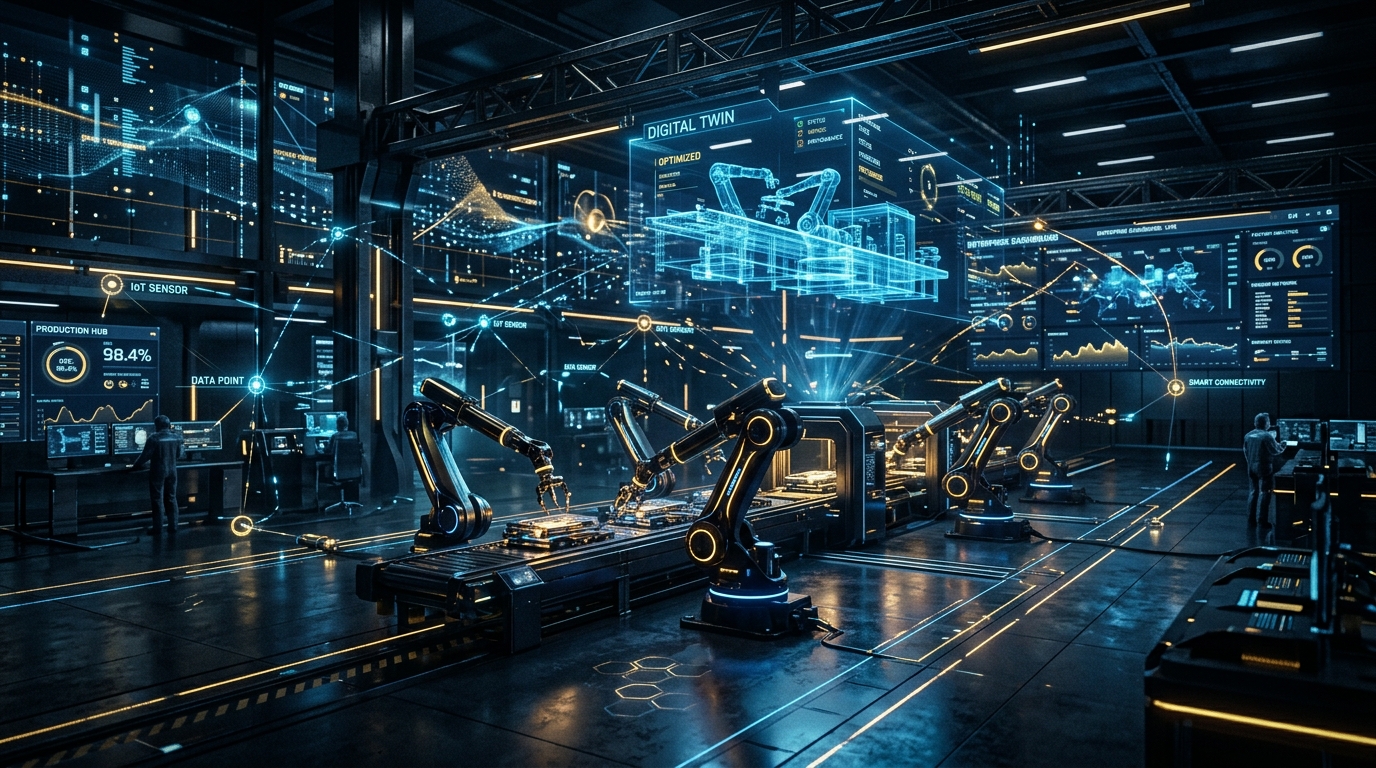
Digital Twins
3D virtual replicas of physical production lines for simulation and stress testing.
Success Stories
Deployed in the World's Smartest Factories


Technical FAQ
How do you extract data from legacy PLCs (Siemens, Allen-Bradley) without disrupting production?
We utilize non-intrusive industrial edge gateways (like Litmus or Kepware) that speak native industrial protocols (Modbus, OPC UA, PROFINET). These gateways quietly read the data registers from the PLCs in read-only mode, entirely eliminating the risk of accidental control signals disrupting the line.
What is cyber-physical security and how do you implement it?
In factories, a cyber attack can result in physical damage or human injury. We implement the Purdue Enterprise Reference Architecture, creating strict air-gaps and utilizing hardware Data Diodes to ensure data can flow out of the OT network to the cloud, but hackers cannot send commands back in.
Can your MES integrate with our global SAP ERP?
Yes. We engineer bidirectional APIs that push live production yields from the factory floor directly into SAP or Oracle NetSuite, and pull down daily work orders to route them to the specific machine operators.
How much data is required to train a Predictive Maintenance AI?
Machine learning requires historical failure data. Typically, we need 3 to 6 months of high-frequency telemetry (vibration, acoustics, temperature) correlated with maintenance logs to train a model capable of accurately predicting a motor failure weeks in advance.
Optimize Your Operations
Ready to build the factory of the future?
Partner with engineering experts who understand both modern cloud software and legacy industrial hardware.